
Your Body Is Compensating, And It's Costing You Everything
Most people don't have a breathing problem. They have a pressure regulation problem. And every breath they take is reinforcing the compensation pattern that's keeping them exhausted, anxious, and disconnected.
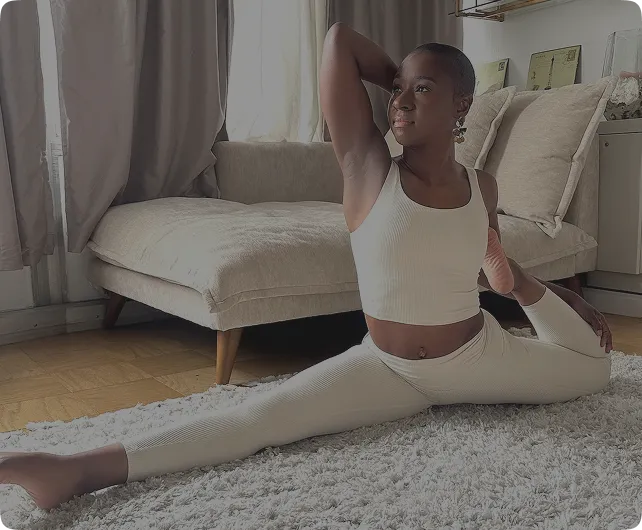
What Is Bodi KEMiSTRI™?
Bodi KEMiSTRI™ is a somatic methodology rooted in one essential truth: The breath moves the body — and the body remembers everything.
The Hydraulic Breath™ (nasal, closed-circuit breathing).
The Five Diaphragms of Pressure & Perception.
The Five Anchors of Postural Awareness.
Trauma-informed somatic mapping.
Micro-alignment drills.
Emotional nervous system integration.
This practice re-teaches your body how to stabilize, feel, and release chronic tension.
Bodi KEMiSTRI™ restores this coherence by organizing breath, structure, and sensation—mechanically, not metaphorically.

Nervous Regulation
Move from reactive, sympathetic bracing to a responsive, regulated presence.

pressure management
Internal hydraulic pressure supports the spine, reducing chronic tension patterns.

relational capacity
When the body feels same, emotional availability and connection naturally deepen.

Embodied Stability
Internal support and posture alignment create steadiness, ease, and grounded confidence.
WORK WITH ME
Why Everything You've Tried Hasn't Worked
You've done the therapy. Tried the breathwork. Practiced the meditation. Maybe even seen multiple practitioners—physical therapists, chiropractors, bodyworkers, coaches. And still: the tension returns, the exhaustion comes back, and your body feels like it's fighting you instead of supporting you.
Here's what no one's told you
Your body isn't randomly dysfunctional. It organized itself this way for a reason—to keep you upright, breathing, and functional with the structure and nervous system capacity you currently have. But that compensation pattern? It's now the problem.
The good news? Patterns can be changed. But first, you have to see yours.

WHAT IS BODI KEMISTRI™
The Body as a Pressure System
At the core of the Bodi KEMiSTRI™ framework is the understanding that your body functions as a pressure-regulated system. Pressure moves through the body via five diaphragms. When these diaphragms work in coordination, the body feels stable, responsive, and safe. When they don’t, the body compensates — often through tension, bracing, or over-effort.
The Five diaphragms are:
Respiratory Diaphragm – Your primary breathing muscle.
Pelvic Floor – The base of your pressure system.
Thoracic Inlet – Where your neck meets your chest.
Cranial Diaphragm – Regulates cerebrospinal fluid.
Oral Diaphragm – Supports the tongue and oral cavity.
These diaphragms regulate how force, breath, and emotion travel through the system. This isn't about relaxation techniques. It's about restoring functional pressure regulation so your nervous system has the structural support it needs to feel safe.
THE HYDRAULIC BREATH™
Why Your Breath Matters More Than You Think
Every inhale and exhale creates shifts in pressure, stability, and emotional tone. The Hydraulic Breath™ restores coherence between all five diaphragms.

Cranial Diaphragm
(Your Upper Pressure Dome)
Regulates cranial pressure and neural flow, supporting calm cognition, sensory balance, and upper body integration.

Oral Diaphragm
(Tongue-to-Palate Anchor)
Supports tongue posture and oral stability, improving breathing efficiency, jaw balance, and nervous system signaling.

Thoracic Inlet
(The Gateway of Emotion and Expression)
Facilitates emotional flow and expression by balancing neck tension, breath access, and upper chest mobility with care.
Respiratory Diaphragm
(Your Primary Pressure Engine)
Drives breath mechanics and pressure regulation, influencing stress response, energy levels, and internal rhythm.

Pelvic Floor Diaphragm
(Your Foundation of Safety)
Provides foundational support for posture and safety, coordinating core stability, grounding, and pelvic integrity.
ABOUT KEMI BLAKE
Your Body Isn’t the Problem. Your Body Is the Portal.
I’m Kemi Blake, a somatic researcher, movement educator, and founder of Bodi KEMiSTRi™ — a nervous-system-based methodology integrating hydraulic breathwork, posture, and embodied awareness.
Drawing from lived experience as an aspiring contortionist and years of international training, I guide high-performing individuals toward regulated presence, embodied resilience, and sustainable change.

THE FIVE ANCHORS™
A simple, felt approach that translates complex anatomy into five physical anchors you can sense, use, and organize in real time.
01
The Tongue
Regulates cranial pressure and neural flow, supporting calm cognition, sensory balance, and upper body integration.
02
The Shoulders
Supports tongue posture and oral stability, improving breathing efficiency, jaw balance, and nervous system signaling.
03
The Ribcage
Facilitates emotional flow and expression by balancing neck tension, breath access, and upper chest mobility with care.
04
The Pelvis
Drives breath mechanics and pressure regulation, influencing stress response, energy levels, and internal rhythm.
05
The Feet
Provides foundational support for posture and safety, coordinating core stability, grounding, and pelvic integrity.
HOW THE ANCHORS WORK
Five anchors create a tangible system that restores internal coherence, helping your body naturally trust and regulate itself.

Awareness of Tension
Identify areas where your body grips or braces to release unnecessary tension safely.

Real-Time Regulation
Learn to calm and organize your system in the moment, wherever you are.

Posture Reorganization
Restore alignment and movement without forcing positions or overcorrecting.

Foundational Stability
Build strength and stability from the ground up, supporting lasting presence.
What You'll Discover in Your Hydraulic Breath Scan™
Discover your dominant compensation pattern and how your body organizes pressure through facial, posture, and breath analysis.

Your Pattern Video (3-4 minutes)
A clear breakdown of your unique pattern, where tension is held, which diaphragms are offline, why it exists, and its impact on movement and stress.

Visual Pattern Report (PDF)
A detailed analysis of your compensation pattern, revealing structural imbalances, side dominance, breath impact, tension sources, and body signals.

3 Starter Practices (5-10 minutes)
Specific exercises for YOUR pattern, not random techniques. These are designed to work with your current organization, not force you into an "ideal" that your body can't access yet.

Strategic Direction
Receive clear guidance on self-practice suitability, proper sequencing, what to avoid, and next steps for deeper, comprehensive support.
WHO THIS IS FOR / NOT FOR
Helping You Determine Alignment, Readiness, and Expectations for This Journey

WHO THIS IS FOR
Body stays tense despite feeling safe.
Relief from practices is temporary.
Nervous system can’t meet life demands.
Need real understanding, not techniques.
Constant effort, little progress.

WHO THIS WORK IS nOT FOR
Seeking a quick fix or “5-minute routine”.
Prefer reassurance over real change.
Avoid facing body’s protective patterns.
Rely on others to fix them.
Resist consistent guided practice.
If you're still reading, you're in the right place.
What People Notice First
No hype. Just measurable shifts in how the body feels, moves, and responds.

"I've worked with multiple somatic practitioners, done years of therapy, tried every breathwork modality. This 10-minute assessment gave me more clarity than all of it combined. For the first time, someone explained WHY my body does what it does—not as pathology, but as intelligent compensation. Everything finally made sense."
Dr. Rachel P.
Clinical Psychologist
"I thought I just had tight hips and a stiff neck. The scan revealed I've been compensating for a pelvic floor dysfunction I didn't even know I had. My entire left side was offline. Within two weeks of the practices, I could finally take a full breath without my chest seizing up. This work is the missing piece."
Marcus J.
Founder & CEO
"I'm a yoga teacher and breathwork facilitator. I teach this stuff. And my own body was a mess—completely stuck in an anterior chain holding pattern that no amount of 'breathing into my belly' was fixing. This assessment showed me I was breathing INTO the compensation, not releasing it."
Sarah M.
Yoga & Breathwork Teacher
Common Questions
Clear answers to common questions about the work, sessions, and what to expect.
Is this a medical diagnosis or physical therapy?
No. This is somatic education—pattern recognition based on how your body organizes pressure and movement. It's not medical imaging, diagnosis, or treatment. If you have acute pain or injury, see a healthcare provider first.
How is this different from seeing a PT, chiropractor, or bodyworker?
Most manual practitioners focus on structural alignment and symptom relief. This work focuses on the nervous system patterns and pressure regulation that drive the structural compensation in the first place.
You can adjust someone's pelvis or release their psoas, but if the underlying pressure pattern doesn't change, the compensation returns. This addresses the root pattern, not just the symptoms.
I've done a lot of breathwork. Why would this be different?
This is a nasal only breathing technique. if your body is actively holding a compensation pattern, generic breathwork reinforces the problem.
This work identifies YOUR specific pattern first, then gives you practices that work for your nervous system's current organization. Sequencing matters.
What if I've already tried everything and nothing works?
That usually means one of two things:
1. The interventions weren't addressing your actual pattern (misdiagnosis of the root issue)
2. You were trying to force an outcome your nervous system didn't have the capacity to hold yet
This work doesn't force change. It reveals what's actually happening, then provides a strategic path that works with your body's intelligence, not against it.
How long until I see results?
Most people notice immediate shifts in awareness—"Oh, THAT'S why I do that." Physical changes begin within 1-2 weeks of consistent practice (5-10 minutes daily). Lasting neurological re-patterning takes 6-8 weeks.
This isn't instant transformation. It's strategic, sustainable change.
What if I need more support after the Scan?
Inside your results, you'll receive guidance on next steps based on your pattern complexity:
1. Self-guided practice (if your pattern is straightforward and you're self-motivated)
2. Full-Body Deep Dive ($297) for comprehensive analysis with a live consultation
3. 1:1 Integration Mentorship (application required) for people whose work demands exceed their current nervous system capacity
You're never obligated to work further with me. The Scan is valuable on its own.
Is there a guarantee?
Yes. If you don't gain new insight into your body within 24 hours of receiving your results, I'll refund your purchase. No questions asked.
Your Body Has Been Trying to Tell You Something
You don't need more information. You don't need another modality. You don't need to try harder. You need to see the pattern your body organized to keep you functional—so you can work with it instead of against it. That's what the Hydraulic Breath Scan™ gives you. In 10 minutes, you'll understand what your body has been trying to say for years.
Field Notes — The Journal
Observations on somatic mechanics, structural integration, and the physiology of high performance.

wellness
The Anatomy of Safety
In today's fast-paced world, stress and trauma are all too common experiences that can deeply affect our well-being. However...
wellness
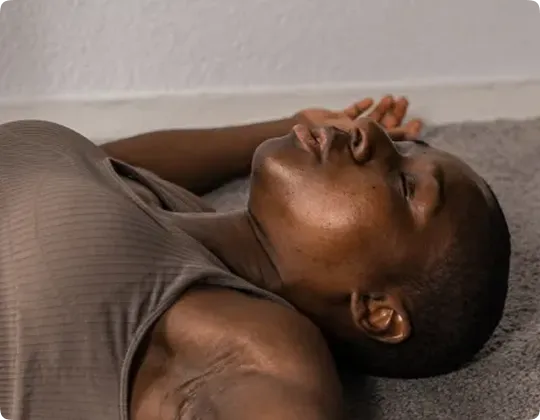
Why Chronic Bracing Changes How You Breathe
In today's fast-paced world, stress and trauma are all too common experiences that can deeply affect our well-being. However...
wellness
Pressure, Not Posture: A Better Way to Understand Alignment
In today's fast-paced world, stress and trauma are all too common experiences that can deeply affect our well-being. However...
contact us
We’d love to here from you! whether you have question about our sessions or just want to say hi!
Have questions or want to learn more about our practices? Reach out to us—we’re here to support your journey toward nervous system balance and embodied well-being.


