
Resources
Free tools, guides, and insights to help you understand how your body regulates pressure.

Free Bodi KEMiSTRI Guide
Understand why your body is more than just "one breathing muscle" and how the five diaphragms work together to regulate pressure, stress, and nervous system state.
What's Inside:
The 5 diaphragms explained (with diagrams).
How dysfunction in one affects the others.
Why most breathwork doesn't address the root issue.
Simple self-assessment to see which diaphragms are offline.
Latest Articles
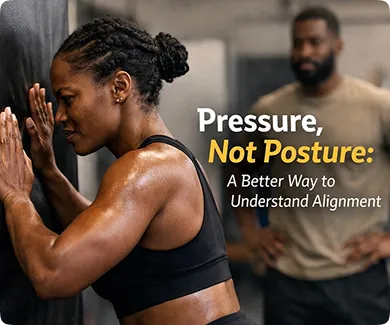
Pressure, Not Posture: A Better Way to Under stand Alignment
We often think of posture as a shape we should hold. Stand taller. Pull your shoulders back. Engage your core.

Why Chronic Bracing Changes How You Breathe
When the body anticipates threat, it doesn't relax. It braces. One of the first places that bracing shows up is the ribcage.
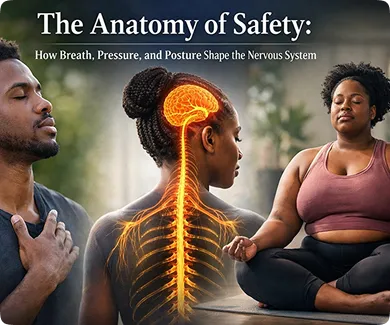
The Anatomy of Safety
Most people believe safety is psychological. I don't. Before the mind labels something as stressful, the body has already made a decision: brace or respond.
Understanding Your Body as a Pressure System

play time: 08 min
Introduction to the 5 Diaphragms
play time: 12 min
Why High-Capacity People Burn Out Quietly

play time: 10 min
The Hydraulic Breath Model Explained
Common Questions
Clear answers to common questions about the work, sessions, and what to expect.
Is this a medical diagnosis or physical therapy?
No. This is somatic education—pattern recognition based on how your body organizes pressure and movement. It's not medical imaging, diagnosis, or treatment. If you have acute pain or injury, see a healthcare provider first.
How is this different from seeing a PT, chiropractor, or bodyworker?
Nasal breathing filters air, produces nitric oxide (a vasodilator), and maintains the correct pressure gradients required for the 'hydraulic' effect. Mouth breathing triggers sympathetic (fight/flight) activation and dumps pressure, leading to core instability.
I've done a lot of breathwork. Why would this be different?
Nasal breathing filters air, produces nitric oxide (a vasodilator), and maintains the correct pressure gradients required for the 'hydraulic' effect. Mouth breathing triggers sympathetic (fight/flight) activation and dumps pressure, leading to core instability.
What if I've already tried everything and nothing works?
Nasal breathing filters air, produces nitric oxide (a vasodilator), and maintains the correct pressure gradients required for the 'hydraulic' effect. Mouth breathing triggers sympathetic (fight/flight) activation and dumps pressure, leading to core instability.
How long until I see results?
Nasal breathing filters air, produces nitric oxide (a vasodilator), and maintains the correct pressure gradients required for the 'hydraulic' effect. Mouth breathing triggers sympathetic (fight/flight) activation and dumps pressure, leading to core instability.
What if I need more support after the Scan?
Nasal breathing filters air, produces nitric oxide (a vasodilator), and maintains the correct pressure gradients required for the 'hydraulic' effect. Mouth breathing triggers sympathetic (fight/flight) activation and dumps pressure, leading to core instability.
Is there a guarantee?
Nasal breathing filters air, produces nitric oxide (a vasodilator), and maintains the correct pressure gradients required for the 'hydraulic' effect. Mouth breathing triggers sympathetic (fight/flight) activation and dumps pressure, leading to core instability.
Is this a medical diagnosis or physical therapy?
No. This is somatic education—pattern recognition based on how your body organizes pressure and movement. It's not medical imaging, diagnosis, or treatment. If you have acute pain or injury, see a healthcare provider first.
How is this different from seeing a PT, chiropractor, or bodyworker?
Most manual practitioners focus on structural alignment and symptom relief. This work focuses on the nervous system patterns and pressure regulation that drive the structural compensation in the first place.
You can adjust someone's pelvis or release their psoas, but if the underlying pressure pattern doesn't change, the compensation returns. This addresses the root pattern, not just the symptoms.
I've done a lot of breathwork. Why would this be different?
This is a nasal only breathing technique. if your body is actively holding a compensation pattern, generic breathwork reinforces the problem.
This work identifies YOUR specific pattern first, then gives you practices that work for your nervous system's current organization. Sequencing matters.
What if I've already tried everything and nothing works?
That usually means one of two things:
1. The interventions weren't addressing your actual pattern (misdiagnosis of the root issue)
2. You were trying to force an outcome your nervous system didn't have the capacity to hold yet
This work doesn't force change. It reveals what's actually happening, then provides a strategic path that works with your body's intelligence, not against it.
How long until I see results?
Most people notice immediate shifts in awareness—"Oh, THAT'S why I do that." Physical changes begin within 1-2 weeks of consistent practice (5-10 minutes daily). Lasting neurological re-patterning takes 6-8 weeks.
This isn't instant transformation. It's strategic, sustainable change.
What if I need more support after the Scan?
Inside your results, you'll receive guidance on next steps based on your pattern complexity:
1. Self-guided practice (if your pattern is straightforward and you're self-motivated)
2. Full-Body Deep Dive ($297) for comprehensive analysis with a live consultation
3. 1:1 Integration Mentorship (application required) for people whose work demands exceed their current nervous system capacity
You're never obligated to work further with me. The Scan is valuable on its own.
Is there a guarantee?
Yes. If you don't gain new insight into your body within 24 hours of receiving your results, I'll refund your purchase. No questions asked.
Ready to See Your Pattern?
If this approach resonates—if you're tired of symptom management and ready to address the root pattern—start with the Hydraulic Breath Scan™. It's the fastest way to see what your body has been doing, and why.
